
South Africa is one of the most unequal countries on earth. That is not a political talking point or a contested claim — it is a measurable, documented reality confirmed by international organizations year after year. The Gini coefficient, which measures income inequality on a scale where zero means perfect equality and one means total concentration of wealth in one person’s hands, puts South Africa consistently at or near the top of global rankings. Wealth, land, education, and opportunity remain deeply and racially concentrated thirty years after the end of apartheid.
This is the unfinished business of 1994. The political transition was real and remarkable — the dismantling of institutionalized racial segregation, the establishment of democratic institutions, the adoption of one of the most progressive constitutions in the world. But economic transformation moved far more slowly. The structure of the economy — who owned what, who controlled capital, who had access to land — changed less dramatically than many had hoped or expected.
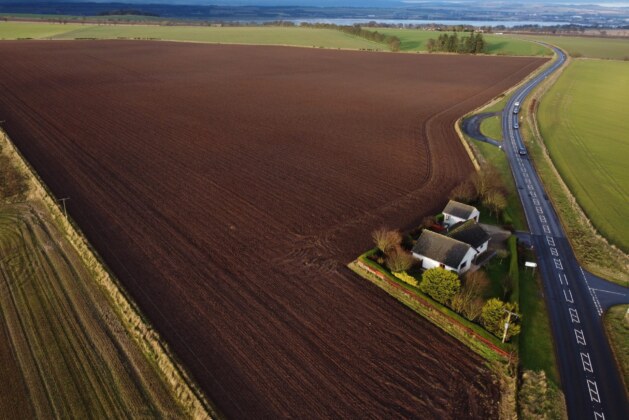
Land is the most emotionally charged element of this debate. In a country where colonial and apartheid governments dispossessed Black South Africans of land for generations — forcing families off farms, out of homes, and into overcrowded townships and reserves — the question of who owns the land remains raw and unresolved. The ANC has consistently promised land reform. The pace of delivery has consistently disappointed those waiting.
The Constitution provides for land expropriation with fair compensation — a mechanism for redistributing land through legal, market-related processes. Progress under this framework has been slow. A proposal to amend the Constitution to allow for expropriation without compensation in certain circumstances became one of the most debated political issues of the past decade, ultimately not proceeding in the form its proponents had hoped.
The EFF, led by Julius Malema, has made land the centerpiece of its political identity. Its position — that land must be returned to the people, without compensation, and held in state custody — resonates strongly with young, unemployed South Africans who feel excluded from the economy their parents were promised. The EFF’s rhetoric is confrontational and deliberately provocative, but it channels something genuine.
The MK Party has adopted similarly radical economic positioning. Its rise in 2024 cannot be separated from the economic frustrations of its core voters — people in rural KwaZulu-Natal, in townships, in communities where unemployment is structural and generational. They are not abstract statistics. They are people who left school and could not find work, whose parents left school and could not find work, who look at the prosperity visible in certain suburbs and city centers and feel no connection to it.
For the governing coalition, managing these pressures while maintaining macroeconomic stability and investor confidence is a genuinely difficult balancing act. South Africa needs foreign investment, which requires policy certainty and stable institutions. It also needs to address inequality at a pace that keeps social cohesion intact — a pace that current investment flows are not generating.
There are no easy answers. Land reform that is too slow perpetuates injustice and fuels political radicalism. Land reform done carelessly can undermine agricultural production and food security, as Zimbabwe’s experience showed. Economic policy that prioritizes stability can feel like prioritizing the comfortable over the desperate. Policy that prioritizes redistribution without economic growth can end badly for everyone.
What is clear is that thirty years is a long time to wait. A generation has grown up knowing no other political order than the post-apartheid one, has watched its promises partially delivered, and is increasingly willing to vote for whoever speaks most directly to its frustration. South Africa’s leaders ignore that at the peril not just of their careers, but of the democratic project itself.





Leave a comment