
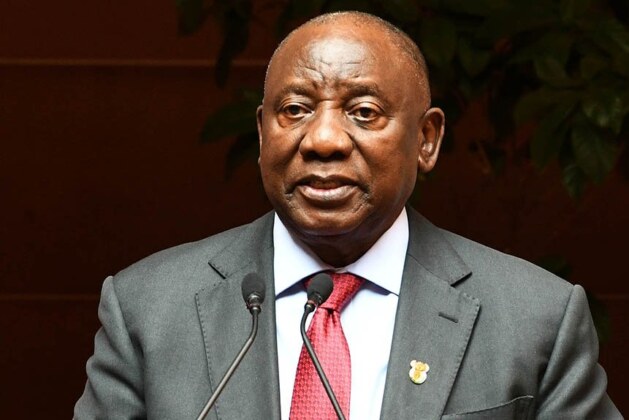
Matamela Cyril Ramaphosa was born on November 17, 1952, in Soweto, South Africa — a township that would become synonymous with the struggle against apartheid. Raised in a modest household by his father, a retired policeman, and his mother, Ramaphosa grew up acutely aware of the racial injustices that defined South African society under the apartheid regime.
He pursued his early education in Soweto before enrolling at the University of the North (now the University of Limpopo), where he studied law. It was during his student years that Ramaphosa became deeply involved in political activism. He was a prominent member of the South African Students Organisation (SASO) and was detained twice under security laws — first in 1974 and again in 1976 — spending periods in solitary confinement. These experiences only hardened his resolve.
After completing his legal studies, Ramaphosa channelled his energy into the labour movement. In 1982, he became the founding secretary-general of the National Union of Mineworkers (NUM), transforming it from a fledgling organisation into one of the most powerful trade unions on the continent. Under his leadership, NUM’s membership swelled from 6,000 to over 300,000 workers. He led historic mining strikes that challenged both the apartheid government and mining conglomerates, establishing himself as a formidable negotiator and a voice for the working class.
Ramaphosa’s prominence grew rapidly within the African National Congress (ANC). In 1991, he was appointed Secretary-General of the ANC, becoming a key architect of South Africa’s transition from apartheid to democracy. He chaired the Constitutional Assembly and played an instrumental role in drafting South Africa’s post-apartheid constitution — widely regarded as one of the most progressive constitutions in the world. He was also central to the multiparty negotiations that led to the country’s first democratic elections in April 1994, demonstrating exceptional skill at bringing opposing forces to the table.
Despite being widely expected to become Deputy President under Nelson Mandela, Ramaphosa was passed over for Thabo Mbeki. He subsequently stepped back from frontline politics and entered the business world. Through strategic investments and board positions, he built a vast business empire and became one of the wealthiest individuals in South Africa. His business career, however, was not without controversy, particularly regarding his involvement in the Marikana massacre of 2012, in which 34 striking miners were killed by police — a tragedy that cast a long shadow over his legacy.
Ramaphosa returned to mainstream politics with purpose. In 2014, he was elected Deputy President of South Africa under President Jacob Zuma. Following years of state capture scandals that plagued the Zuma administration, Ramaphosa defeated Nkosazana Dlamini-Zuma for the ANC presidency in December 2017 by a narrow margin. In February 2018, he was sworn in as President of South Africa after Zuma resigned under pressure.
As president, Ramaphosa pledged to tackle corruption, revive a stagnant economy, and restore investor confidence. Re-elected in 2024, he continues to navigate a complex political landscape, balancing coalition governance with the enormous challenges of inequality, unemployment, and institutional reform that define the South Africa of his era.
Leave a comment