
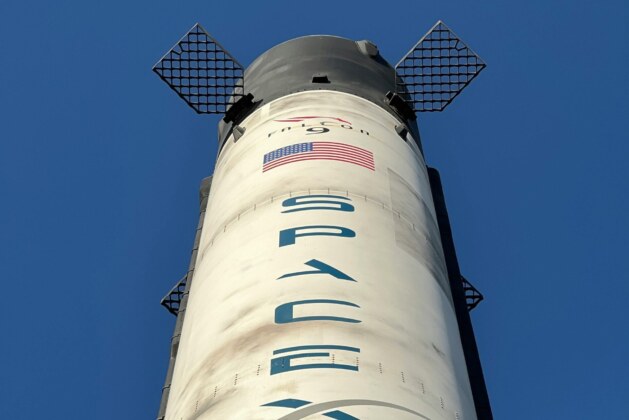
SpaceX achieved a landmark milestone in its Mars mission programme this week after Starship — the most powerful rocket ever built — completed a full orbital test flight and executed a precision ocean landing, validating key systems that the company says are essential to its long-term goal of sending humans to Mars.
The launch, which took place in the early hours of Tuesday morning from SpaceX’s Starbase facility in South Texas, proceeded without the technical difficulties that plagued earlier test flights. Starship reached full orbital velocity approximately 12 minutes after liftoff, completing one and a half orbits of the Earth before the upper stage re-entered the atmosphere and splashed down in the Indian Ocean at a point within 300 metres of the target coordinates.
CEO Elon Musk called the test a watershed moment in a statement posted to social media shortly after the landing was confirmed. NASA, which has contracted SpaceX to use a version of Starship as a lunar lander for its Artemis programme, also issued a statement welcoming the successful test as a positive development for the agency’s own deep space ambitions.
The test validated the ship’s thermal protection system, which uses thousands of ceramic heat shield tiles to protect the vehicle during the intense temperatures of atmospheric re-entry — a capability that will be essential for returning cargo and eventually crew from Mars, where atmospheric re-entry conditions are significantly different from Earth’s.
SpaceX has announced that it plans to conduct two further test flights this year, each with progressively heavier payloads and more demanding reusability demonstrations. The company maintains its stated goal of launching an uncrewed Mars cargo mission by 2027, though independent space analysts consider this timeline ambitious given the regulatory and technical milestones still ahead.


Leave a comment