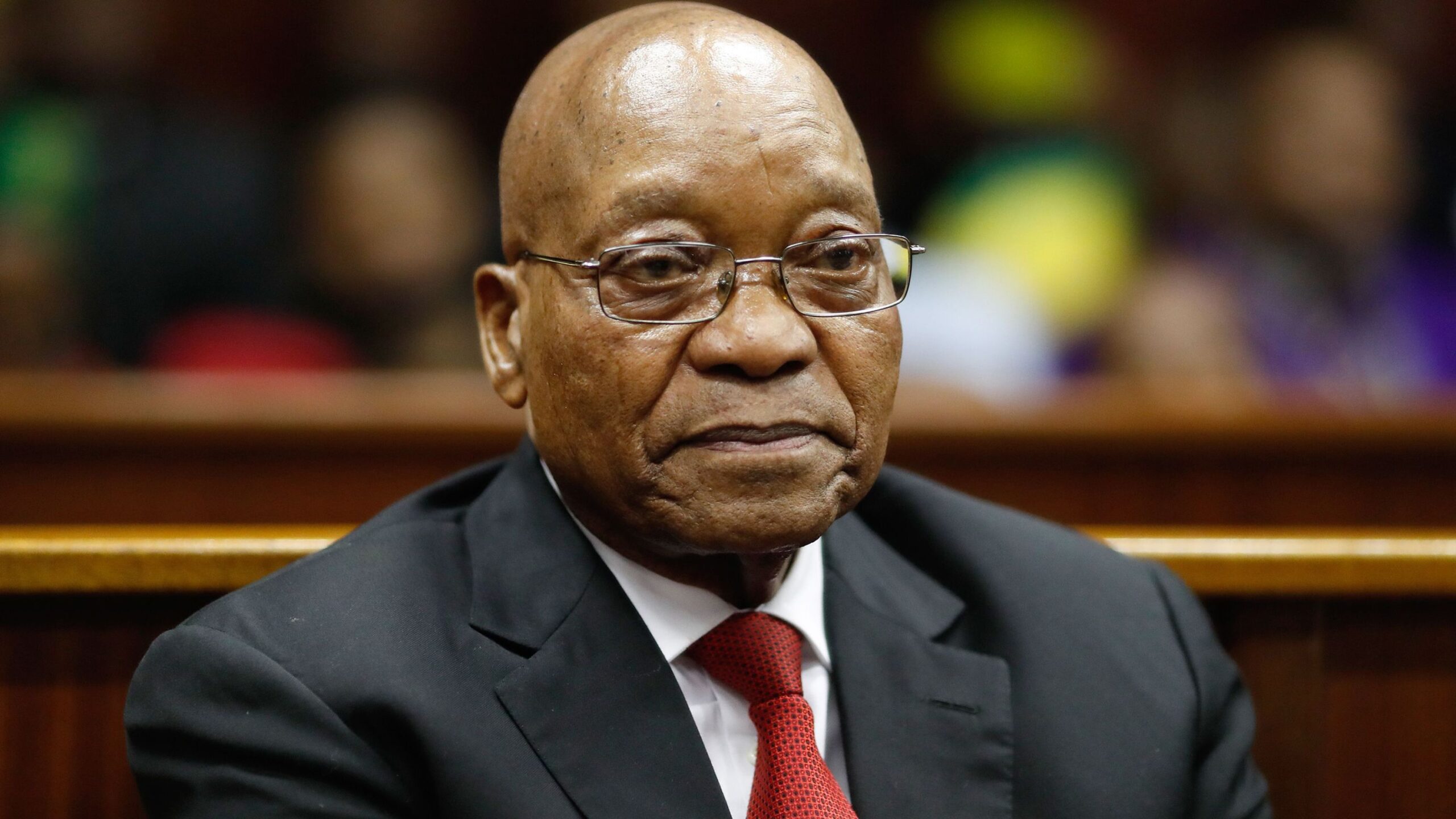

Very few politicians in South African history have managed to divide opinion as sharply, or as durably, as Jacob Zuma. He is simultaneously beloved and reviled, celebrated and prosecuted, politically dead and somehow still very much alive in the national conversation. Understanding him is essential to understanding where South Africa finds itself today.
Zuma served as president from 2009 to 2018. His tenure began with real promise — he was seen as a more accessible, warmer figure than his predecessor Thabo Mbeki, with deep roots in the ANC’s underground and exile networks. He played the political game with a skill that many underestimated, consolidating power within the party while keeping rivals off-balance and the press busy.
But the years of his presidency became increasingly associated with corruption on a staggering scale. The concept of state capture — the systematic redirection of state resources and institutions into private hands — became almost synonymous with his administration. The Gupta family, business associates of Zuma’s with extraordinary access to government contracts and influence over cabinet appointments, became the central symbol of what state capture looked like in practice. Billions of rands moved through state-owned enterprises in ways that auditors and later commissions would spend years untangling.
Zuma was eventually pushed out of the presidency by his own party in early 2018. He was replaced by Cyril Ramaphosa, and there was, briefly, a national mood of something like hope — a sense that the damage could be repaired and accountability restored. That mood was not entirely without basis. Ramaphosa moved to clean up state institutions, the prosecuting authority began to regain some independence, and commissions of inquiry produced mountains of evidence about what had gone wrong.
But Zuma did not exit the stage. He fought every legal proceeding brought against him, deployed batteries of lawyers to delay proceedings, and cultivated a public persona as a persecuted freedom fighter being targeted by his enemies within the ANC and the courts. A significant portion of the South African public — particularly in his home province of KwaZulu-Natal — remained loyal to him throughout.
In 2021, when a Constitutional Court ruling led to his brief imprisonment after he refused to appear before a commission, parts of KwaZulu-Natal and Gauteng erupted in looting and violence. More than three hundred people died. The episode revealed how much social tension had accumulated beneath the surface, and how quickly it could ignite around Zuma’s person.
By 2024, Zuma had formally broken with the ANC — the party he had joined as a teenager in the 1950s — and aligned himself with the newly registered MK Party. He was barred from standing for parliament himself due to his criminal conviction, but he became the face of the party’s campaign, and his image appeared on billboards across KwaZulu-Natal. The MK Party took 14 percent of the national vote and became the largest party in KwaZulu-Natal.
What Zuma represents, beyond the legal cases and the corruption findings, is something uncomfortable for the South African political establishment to grapple with. He taps into a genuine sense of grievance among people who feel that thirty years of democracy have not delivered for them — that the economic transformation promised in 1994 remains unfinished, that elites of all races have prospered while the poor remained poor.
Whether or not one accepts his framing of himself as the victim, the millions who voted for his party communicated something real. South Africa’s politics will not resolve itself by ignoring what they said.